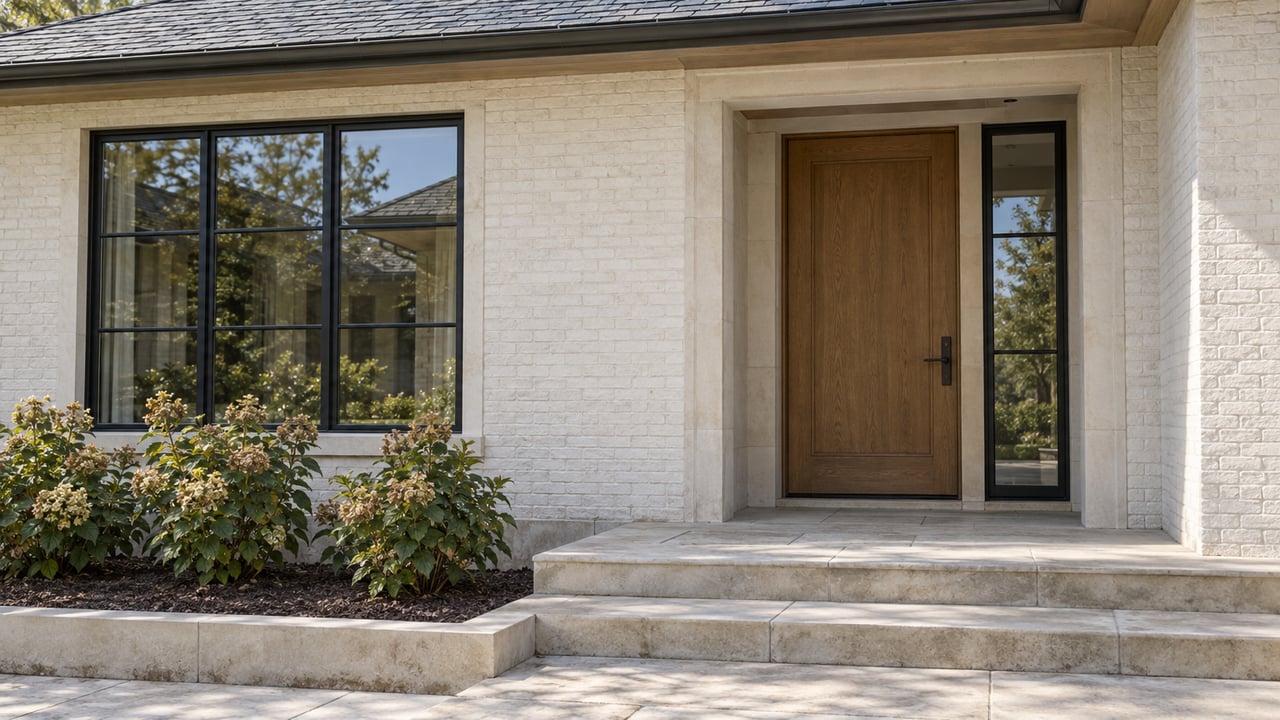
Westover Hills' Tax Base Shrank This Year. Why Did the Average Town Tax Bill Go Up?
October 22, 2026
October 22, 2026
The average single-family home in the Town of Westover Hills went into the FY 2026-27 budget with a lower taxable value than the year before. It fell 4.9%, to $2,462,417. The town levy on that same average home went up 5.4%, to $13,268. The value dropped and the bill rose in the same year, in a town with 270 single-family homes on its roll.
Anyone pricing a home here should take that as a warning. In Westover Hills, the tax line depends on two things the listing doesn't show: how much revenue the town decides it needs, and how long the current owner has held a homestead exemption. Neither one carries over to the next owner the way the floor plan does.
Every buyer's ownership-cost estimate eventually gets to property taxes, and the easy number is the seller's last bill. That number reflects the seller's homestead history, and that history ends at closing.
Section 23.23 of the Texas Tax Code limits how fast a homestead's appraised value can rise. The cap is the lesser of market value or the prior year's appraised value plus 10% and any new improvements. The cap ends on January 1 of the first tax year that neither the owner it started with nor that owner's spouse or surviving spouse qualifies for the homestead exemption. A buyer's own cap starts only after the buyer qualifies. So a long-held house whose appraised value has been sitting below market for years can come to the new owner at its full market value.
Tarrant Appraisal District's guidance adds a detail that matters right now. Skipping a reappraisal year doesn't touch the cap, so a capped homestead's appraised value can still go up by as much as 10% a year until it reaches market value. A frozen market value doesn't mean a frozen bill.
Westover Hills also offers nothing to soften the town's share. TAD's 2026 rate sheet shows the town with a $0 local homestead exemption and a $0 over-65 exemption. The City of Fort Worth's entry on the same sheet shows a 20% homestead exemption. Because the town takes nothing off, its full rate applies to the home's taxable value. That's why the town's figures above divide so neatly: $13,268 is almost exactly 0.539% of $2,462,417.
The town's FY 2026-27 combined budget lays out the math. The council approved it in September with five votes for and none against. Mayor Kelly Thompson was present and did not vote.
| Westover Hills budget line | FY 2025-26 | FY 2026-27 |
|---|---|---|
| Total net taxable value | $731.9 million | $697.4 million |
| Adopted tax rate per $100 | $0.486364 | $0.538840 |
| No-new-revenue rate | $0.470484 | $0.523264 |
| Voter-approval rate | $0.501989 | $0.551906 |
| Average single-family town levy | $12,588 | $13,268 |
Existing property lost 6.0% of its value, about $43.8 million. New construction added $9.3 million back, which is why the total fell only 4.7%. The no-new-revenue rate is the rate that would have collected about the same revenue from the same properties. The council set the rate above that line and just under the voter-approval ceiling. That's a 10.8% rate increase. It brings in $193,283 more than last year, 5.42% more, and only $50,200 of that comes from new property on the roll.
At the August 18 budget review, Mayor Thompson said the 4.7% decline came largely from the freeze on appraisals put in place by the new director of the Tarrant Appraisal District. He said the smaller base would squeeze the budget and that new state limits on rate increases would constrain it further.
This isn't new. Over the five years from the FY 2022 budget to the FY 2027 budget, the average single-family taxable value went from $1,947,165 to $2,462,417, up about 26%. Over the same period the average town levy went from $9,325 to $13,268, up about 42%. The town's bill has outgrown home values for years. In 2026 the two simply moved in opposite directions.
The freeze the mayor mentioned is a written policy. TAD's reappraisal plan records 2024 board motions telling the chief appraiser to reappraise residential property every two years, hold 2025 residential values at 2024 levels except for new improvements, and require clear and convincing evidence for residential increases of 5% or more. The plan schedules residential reappraisals for odd-numbered years starting in 2027. Other property types are still reappraised every year.
The Fort Worth Report covered the September 8 board meeting. The board voted 5-4 to reappraise residential property in 2027 and keep the odd-year schedule. Homes stayed at their earlier, higher market values for 2026 even though the housing market had dipped. In June, the Fort Worth Report quoted chief appraiser Joe Don Bobbitt saying the county's residential roll had become "less uniform and more regressive" since the freeze.
At the September meeting, one speaker described what Westover Hills' budget then showed in practice. The Fort Worth Report quoted the speaker:
"But a freeze by itself is just going to shift the burden over to the local entities to raise their rate."
Board chairman Rick Barnes answered that rate decisions belong to the taxing entities, not the appraisal district. The same article reports that Fort Worth was weighing a higher city rate to close a $94 million shortfall, and Colleyville proposed a 13% increase. Both accounts lead to the same place for a buyer. While values are held flat, the rate is what moves.
The town levy is the smallest piece most owners look at. A TAD property record for a Westover Hills parcel lists six taxing jurisdictions. Here are their 2026 rates from TAD's sheet, last updated October 1, 2026:
| Taxing unit | 2026 rate per $100 |
|---|---|
| Fort Worth ISD | $1.029099 |
| Town of Westover Hills | $0.538840 |
| Tarrant County | $0.186000 |
| Tarrant County Hospital District, JPS | $0.159000 |
| Tarrant County College | $0.120000 |
| Tarrant Regional Water District | $0.027300 |
Added together, the nominal rates come to about $2.06 per $100. Each unit applies its own exemptions, so the effective bill differs from house to house. Fort Worth ISD homesteads get the state-mandated $140,000 school homestead exemption, which the Texas Comptroller lists as current. At Westover Hills price points, $140,000 is a small share of the value.
Two of the six were in the news this fall. Tarrant County adopted its $0.186 rate, a cut for the fourth year in a row. Tarrant County College trustees approved $0.120, up from $0.11228. The college later corrected the property-value decline it had cited to $3.8 billion, not roughly $39 billion. The rate itself didn't change.
The 270 homes on the town's roll carry a full municipal budget. FY 2026-27 general-fund spending includes $1,922,456 for police and $798,558 for public works. That cost doesn't shrink when appraisals fall, so the rate has to rise when the value roll goes down.
The capital plan names the streets. It budgets $79,725 for micro-surfacing on Westover Terrace, Valley Ridge, Wyatt and Canterbury, and $408,733 for 14 streetlights carried over from last year's plan. Stormwater work is planned at 69 Westover Terrace, along with a Westover Drive drainage study and culvert replacement and a Deepdale Drive relief swale. The largest item is $1.4 million for half of the Merrymount cast-iron water-line replacement.
Water and sewer bills go up separately from property taxes. The budget raises the volumetric water price from $5.73 to $6.23 per thousand gallons and sewer from $3.82 to $4.72. The monthly base charges stay at $31 for water and $13 for sewer. In August, the mayor also said town staff were reviewing a fee schedule believed to be "considerably below market." A buyer modeling yearly costs should expect fees to keep moving as well.
When do Westover Hills residential values get reappraised next? TAD's board kept the odd-year schedule, so the next residential reappraisal is in 2027. Three TAD board seats are on the November 3 ballot, according to the Fort Worth Report.
Does the town offer a homestead or over-65 exemption? TAD's 2026 rate sheet shows $0 for both on the Town of Westover Hills line.
Does the seller's capped value carry over to me? No. Under Section 23.23, the cap ends when the owner it started with, or that owner's spouse or surviving spouse, no longer qualifies. A new owner's cap begins only after they qualify for the exemption.
This post is general information, not legal, tax or financial advice. Please confirm how these rules apply to your property with a tax professional or the Tarrant Appraisal District.
If you're weighing a Westover Hills purchase or sale, Ivy House Realty can help you work out a realistic tax line for that specific house before you set a price or make an offer. Contact Us.
Stay up to date on the latest real estate trends.
We pride ourselves in providing personalized solutions that bring our clients closer to their dream properties and enhance their long-term wealth.